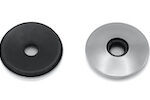
Our bonded sealing washers consist of EPDM rubber that is permanently bonded onto a thin stainless steel washer. The inside rubber surrounds the threads of the screw to keep moisture out when installed.
Our EPDM bonded sealing washers are installed under the heads of self drilling, self-tapping, and self piercing screws. The rubber faces down and makes contact with the mating metal. EPDM is bonded to 304 (18-8) stainless steel for superior corrosion resistance. We stock large diameter washers up to 1 1/8″ OD”.
The Key Points of EPDM Bonded Sealing Washers
- Moisture protection
- Cushioning washers
- Acoustical control
- Vibration control
- They protect the scratching between the bottom of the screw and the base metal
As the screw is being driven in, the rubber in the underside of the screw makes contact with the metal. The rubber washer faces the bottom and eliminates metal to metal contact.
Inquire for Product Quotes – Click on Product Images
EPDM Bonded Sealing Washers

Self Drilling Screws w/ EPDM Bonded Sealing Washers

Plain screws when drilled without rubber washers underneath creates metal to metal contact when they bottom out and stop. This causes scratching on the base metal. These scratches on the metal cause corrosion and rusting to start. The metal-to-metal scratching exposes the base metal which accelerates this corrosion and rusting process.
Our EPDM washers have a base of 304 (18-8) stainless steel. This is the most commonly used grade of stainless steel for these washers. 18% chromium and 8% nickel are added to mostly iron to create stainless steel.
Our stainless steel EPDM washers provide superior corrosion and rust resistance. We choose this high strength steel because of their exceptional qualities.
Ford Fasteners uses 304 stainless washers on our 410 stainless self drilling, self-tapping and self piercing screws for superior strength and corrosion resistance. We offer in house assembly with our high-speed machines.
Features of EPDM bonded washers
EPDM, or ethylene propylene diene monomer rubber is a synthetic rubber known for its outstanding use of:
- Sunlight Resistant
- UV Resistance
- Ozone Resistance
- Heat Resistance (approx. -40ºF to 266º)
- Water (hot and cold) moisture/rain
- Weather Resistance
- Superior Insulating Properties
Neoprene (Neo) Washers
In addition to EPDM washers, we also offer Neoprene washers. Neoprene, more formally known as polychloroprene (PC), is a synthetic rubber quite similar to EPDM. Neoprene washers are generally used in Interior applications, away from UV rays. Neoprene is highly resistant to chemicals and oils. These washers do a great job insulating against heat and moisture. These are a lower resistance range and less flexible at low temperatures therefore not recommended for direct contact with petrochemicals.
Why Material Pairing Matters in Sealing Washer Construction
The combination of stainless steel and EPDM rubber creates a balanced system that supports both structural strength and environmental protection. Stainless steel provides rigidity and corrosion resistance, while the EPDM layer forms a resilient barrier that adapts to surface irregularities. This pairing ensures that the washer maintains consistent sealing pressure even as the assembly experiences vibration, temperature changes, or minor shifts in alignment.
Key Factors to Consider When Selecting a Sealing Washer
Choosing the right bonded washer depends on several practical considerations that influence performance and longevity:
- Surface Conditions — Clean, smooth surfaces allow the EPDM layer to form a more reliable seal.
- Fastener Type — Drill point, tapping, and piercing screws each create different compression profiles.
- Environmental Exposure — UV, moisture, and temperature extremes determine whether EPDM or neoprene is the better choice.
- Panel Thickness — Thicker materials may require larger diameters to maintain proper load distribution.
Bonded Sealing Washers FAQs
What Is the Purpose of Bonded Sealing Washers?
A bonded washer creates a moisture-resistant seal while preventing metal-to-metal contact, reducing scratching and long term corrosion.
Why Is EPDM Used for Exterior Applications?
EPDM offers exceptional resistance to sunlight, ozone, temperature swings, and moisture, making it ideal for outdoor metal assemblies.
When Should Neoprene Washers Be Used Instead of EPDM?
Neoprene is preferred for interior environments where chemical and oil resistance are more important than UV or weather protection.
Do Bonded Washers Improve Fastener Longevity?
Yes. By preventing scratching, distributing load, and maintaining a consistent seal, bonded sealing washers help extend the service life of both the fastener and the surrounding material.